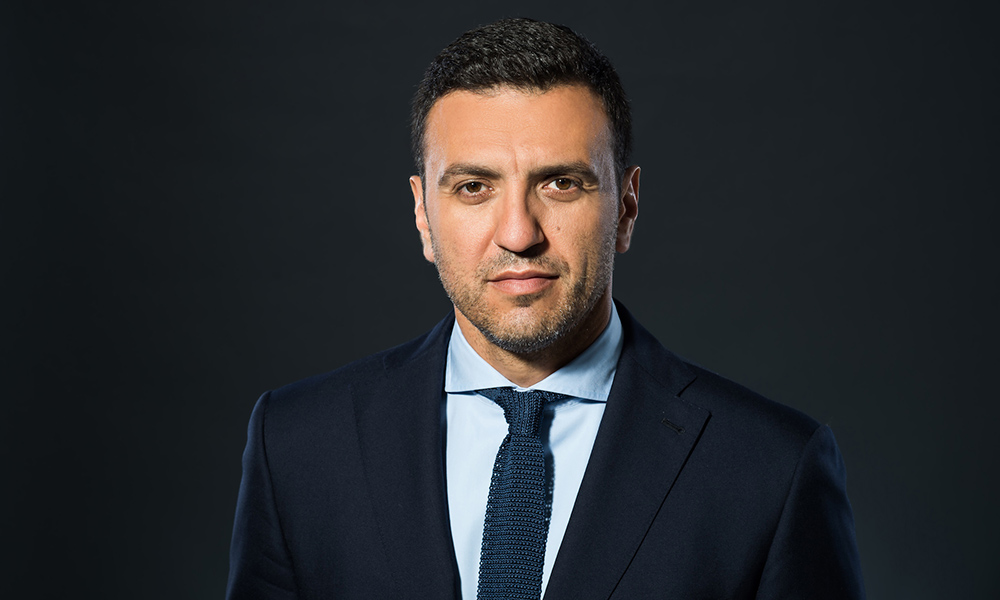
26 Oct INTERVIEW WITH VASSILIS KIKILIAS, MINISTER OF TOURISM, GREECE
Prisma Reports (PR): How has the COVID-19 pandemic affected Greece’s tourism sector?
Vassilis Kikilias (VK): The pandemic affected all sectors of economic life, not only in Greece but in every country around the world. It heavily affected tourism revenues. One out of every four euros comes directly or indirectly from sectors involved with these revenues. It was a profound challenge to tackle the issues of safeguarding the health and safety of our people and visitors and keep the market open. In this regard, the bond between the health and tourism ministries was unprecedented in the past two years.
The extremely early initiatives set forth by Prime Minister Kyriakos Mitsotakis regarding a common form of recognizing vaccinated persons from countries in the European Union (EU) — instigated way before the summer vacation period allowed for travel — is within a strict framework of protocols modeled after our hospitals. Compliance by our hotels and other tourism actors was key in creating the foundation that built an unparalleled level of trust in Greece and helped the resilience of the tourism sector. We need to continue to maintain the level of trust we have established. Safety remains the number one factor for potential visitors. There will indeed be challenges such as protecting the quality and authenticity of the Greek tourism products we are offering.
(PR): Has Greece seen an uptick in visitors since the market opened up to travel?
(VK): All provisional data shows that we outperformed our original estimates. After a hesitant start in June, we managed to reach beyond our original goals. Furthermore, data shows a positive trend of qualitative figures, which is crucial for us. The average expenditure per trip rose from €535 in 2019 and €583 in 2020 to more than €600 euros. The average length of stay also rose. The estimates by industry officials based on the positive performance in recent months rose to a total revenue ranging from €10 billion to €12 billion, well above our original assumptions of €5 billion to €7 billion.
Based on provisional data from the Bank of Greece, from January to July of 2021 the balance of travel services showed a surplus of €2,964 million, up from a surplus of €867 million in the same period in 2020. Essentially, there was a €1,972 million or 139.7% increase to €3,394 million. This rise is attributed to a 51.4% increase in inbound travel flows and a rise of 57.3% percent in average expenditure. In other words, the number of inbound travelers rose by 51.4% to 4,550 in this period.
The impact of our efforts in the tourism sector has benefitted the overall national economy as tourism is interconnected with all production sectors in Greece. The data from the Bank of Greece is tremendously positive and promising as far as tourist flows in the summer season. The performance in July and August in particular is comparable to 2019. The data shows a gradual increase and confirms the resumption of Greek tourism while respecting the safety of tourists, citizens and those working in the sector. We are working to extend the season into autumn and increasingly support tourism businesses to bounce back.
(PR): How is the ministry changing its strategy to deal with ongoing changes caused by the COVID-19 pandemic?
(VK): Our industry is in the process of designing its medium- to long-term strategy for the post-pandemic decade. Important resources are expected to flow into the country to strengthen investments in key sectors of the Greek economy. This will give us the impetus to gain resilience and adapt to the new demands of digital transformations. In the context of the promotion of sustainable tourism development, continued extroversion and extension of the tourism season are important milestones in our new strategy.
A key priority for the Greek government is to incentivize high-quality investment projects, and to promote high added value and green entrepreneurship in tourism. To this end, several initiatives have been taken such as establishing a special service for the promotion and licensing of tourism investments and the rationalization of the regulatory framework to facilitate and support fast-tracked investments. These are both key for us to create a framework that can support and strengthen investments in Greece. Investments will be used for the following: upgrades or the establishment of new hotel units and spa centers, upgrades to tourism products in high-end segments and special tourism infrastructure, such as touristic ports, marinas, theme parks, health and sport infrastructure and halls for conferences.
We are aware that our 10-year national strategic planning for tourism development is being launched in a particularly difficult period in terms of challenges and competition. It will therefore be coordinated with the priorities of the European Recovery and Resilience Fund. New financial tools will be created starting now across the following axes: product development and promotion, accessibility and connectivity, green infrastructure, sustainable development destinations, experience management, tourism education and training, government approach, regulatory framework and crisis management.
The main objective of the strategic marketing plan for Greek tourism in 2021 was the recovery of Greece as a tourist destination while taking into consideration current conditions and national and global trends. It was not an easy task by any means. Within the plan, three scenarios are deployed: best case, baseline and worst-case scenario. While following the latest developments regarding the pandemic, the Ministry of Tourism took action to strengthen destination management through the creation of a governmental framework that facilitates cooperation between the various actors at local and regional levels to ensure continuity of the promotion of tourism products and high quality of services. Legislation was introduced to facilitate the establishment of destination marketing organizations as a critical factor. They will be assisted by local sustainable development observatories to provide all metrics and current challenges faced by destinations. We are taking into account data intelligence, science-based approaches and assessment mechanisms for evidence-based policy making procedures.
Greece has set the goal to establish a national observatory for sustainable tourism development. Its mission will be to highlight the competitive advantage of tourism destinations, strengthen positive economic results of tourism to the national gross domestic product and beautify local communities in accordance with the sustainable development goals of the 2030 United Nations’ agenda. The national and regional observatories will become a data pool and an indicator resource that will serve as a stakeholder platform contributing to a vice-versa procedure of data exchange to inform and drive effective policy planning and create early warning systems for tourism. This has been lacking up until now and has become our focus.
A law put down by the Ministry of Immigration and Asylum has been inserted in Greek parliament to capitalize on new trends that have emerged in the midst of the pandemic, namely surrounding the phenomenon of digital nomads. As part of the law, there are special provisions regarding the attraction of this demographic by introducing a series of regulatory incentives and the issuance of visas for these individuals. The Greek government seeks to take advantage of this strong momentum. According to a Nestpick study, Athens ranks 31st in the world in the list of the 75 best nations for digital nomads. Other projects related to digital transition and optimal data management include simplification procedures, digitalization and optimization of the ministry’s operations and its supervised entities through the interconnection of central databases and those of regional tourism offices.
(PR): What effect will the Hellinikon Metropolitan Park have on Greek tourism?
(VK): Benefits derived from this investment will be reaped by all Athenians and Greeks. It will have a positive impact on the country brand on the worldwide stage. For many years, Athens has been inward looking and, in a way, we have neglected our best assets. We have beaches and impressive coastal beauty. This introversion has shifted dramatically to the openness of the city to the sea and the creation of the Athenian Riviera. Hellinikon, the largest project of its kind in Europe, pivots our focus in that direction. It will affect not only the lives of Athenians, but dramatically change the city as a global destination for the better. This project, coupled with a modern conference center, puts Athens at the forefront in terms of city breaks. There are few capitals in the world with such an abundance of history and culture that also showcases pristine beaches just 20 minutes from the center. This unique combination is an asset that we will heavily invest in. The Hellinikon project is a key factor in this expansion.
(PR): What is the government doing to promote startups in the tourism sector?
(VK): The Ministry of Tourism in cooperation with the Hellenic Chamber of Hotels, a legal entity of public law supervised by the ministry, promotes the CapsuleT project, Greece’s first travel hospitality accelerator for tourism startups. The initiative aims at bringing extra value to both hotels and tourism startups by offering practical training, acceleration, financial support and providing guidance to young entrepreneurs. The letter T stands for tourism, technology and travel. The accelerator programs and activities include educational and training seminars, open events, monitoring, networking opportunities in Greece and abroad, meetings with hotel and tourism professionals, partnerships and synergies with the tourism industry and academic, business and startup communities.
(PR): What hurdles do you want to overcome in the next year as Minister of Tourism?
(VK): We need to address the issue of coordinating different provisions for EU citizens to visit EU countries. This is our main goal. As it stands, there are difficulties that deter potential visitors from traveling, especially for smaller periods of time such as city breaks. We need to take similar action to what we did for vaccination certificates. The way people travel is a common ground that we all need to facilitate. If individuals want to travel for two or three days, we must accommodate them and make it easier through less bureaucracy while having adequate health protocols in place to keep up our current momentum of safety.
In Greece, we want to focus on promoting alternative destinations for a longer period of time while ensuring that our key destinations are able to tackle the demand to a degree that will protect our product offering. We need to enhance our crisis management plan to be able to effectively address all issues that may arise. We seek to upscale our tourism education through academies and practical training provided by global players. The services sector is imperative for a nice touristic experience, and we want to invest in the rescaling and upscaling of the workforce.
(PR): What are Greece’s advantages as a destination location?
(VK): Greece is a safe destination. We have proven that we can manage health protocols and secure all travelers coming to our country. We offer a unique scenery of sea, sun and sand. We also have a wide array of destinations to visit all year round. No matter what challenges or global public health issues may evolve, we remain solid and consistent. More and more travelers trust us and want to come here and partake in the unbelievable experience we offer. Our focus is to upgrade our offerings to include more cultural and sustainable options. Once one comes here, one never wants to leave. There are so many more places and islands to visit in our country. This is our strategy. We are implementing it day by day, week by week, month by month and year by year.
Sorry, the comment form is closed at this time.